
Drain Lining & No-Dig Relining in Stockport
A cracked or broken drain does not have to mean a digger on your driveway. Most can be repaired from the inside, in a day, through an existing access point — for a fraction of the cost of digging.
Get a second opinion before anyone brings a digger.
The choice nobody explains to you
Digging it up
- A mini digger, or two people with spades, on your driveway or lawn
- Days of disruption, not hours
- Reinstating block paving, tarmac, patio or turf afterwards — often the largest part of the bill
- The dearest of the two by some way, and it is the reinstatement that decides by how much
- Sometimes genuinely unavoidable
Lining it
- Everything goes in through a chamber you already have
- Most jobs done inside a day
- Nothing to reinstate, because nothing was dug up
- A fraction of the cost of excavation
- A design life of 50 years or more
Most people do not know the second column exists. They are told the drain is broken, they picture the garden being dug up, and they either pay for excavation or put the whole thing off for another year while the drain gets worse.
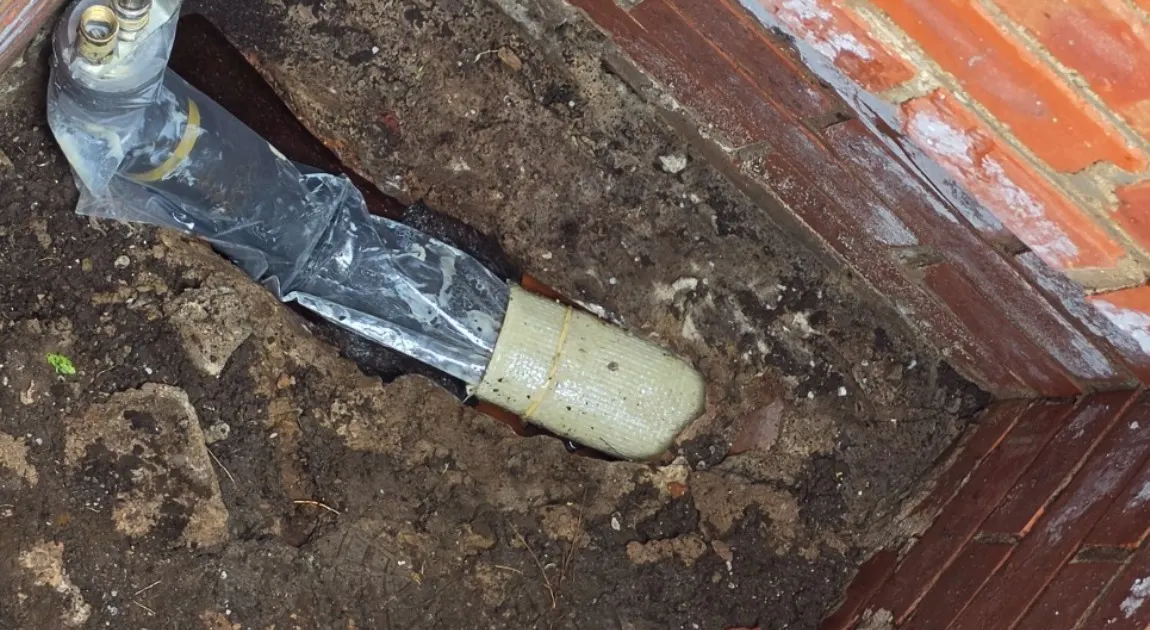
A liner is a resin-impregnated sleeve pulled or inverted into the existing pipe and cured in place. It forms a new pipe inside the old one — structurally sound, jointless, and smoother than the clay it is lining, so it is less likely to catch anything in future.
Patch lining or full relining?
Patch lining
A short liner — typically half a metre to a couple of metres — placed over a specific defect. The right answer when the pipe is fundamentally sound and has one or two identified problems: a cracked section, a dropped joint, a hole where roots are getting in.
Quicker, cheaper, and the most common repair we do.
Full relining
A continuous liner along an entire run, chamber to chamber. The right answer when a pipe is degraded along its length — widespread cracking, multiple root entries, or old clay that has simply reached the end of its life.
Costs more than a patch, and far less than excavating the same length. If a run needs four patches, it usually wants relining instead.
How a lining job runs
- 1
Survey first, always
Nobody can quote a lining job honestly without seeing the pipe. The camera establishes what the defect is, exactly where it is, and whether lining is the right answer at all.
- 2
Clean the pipe
The liner bonds to the pipe wall, so the wall has to be clean. High-pressure jetting first, and roots cut out with a mechanical cutter where they have got in.
- 3
Measure and prepare the liner
Cut to length and wetted out with resin on site. From this point there is a working time before it cures, which is why preparation matters.
- 4
Install and inflate
The liner goes in through the access chamber, positioned over the defect, and is inflated tight against the pipe wall.
- 5
Cure
The resin hardens in place — a matter of hours, accelerated with hot water or steam where needed.
- 6
Camera again, and you keep the footage
A final survey confirms the repair and gives you before-and-after evidence. Worth keeping for insurers and for whoever buys the house eventually.
How long does a liner last?
Cured-in-place liners are designed for a service life of 50 years or more — comfortably longer than the clay pipe most of them are installed into, which was often laid before the Second World War.
Been told you need the drain dug up?
Get a second opinion before anyone brings a digger. Send us the report or the footage and we will tell you honestly whether it can be lined.
Common questions
How much does drain lining cost in Stockport?
It depends on how much pipe needs lining, how deep it is and how we can get to it — a single patch at a joint you can reach from an existing chamber is a different job from relining a full run under a driveway. Anyone quoting a number without knowing those things is guessing, and the guess is usually low. Ring and describe it, or send us the survey footage if you already have it, and you will get a real figure before anyone sets off. What it will always be less than is digging the pipe up.
Is lining as good as replacing the pipe?
For most defects, yes — and in one respect better. The liner is jointless, and joints are where roots get in and where clay pipes fail. You end up with a smooth continuous pipe inside the old one, with a design life of 50 years or more.
Does lining reduce the pipe diameter?
Slightly — a few millimetres of wall thickness. In practice it makes no difference to flow, because the liner is far smoother than the clay it replaces. The gain in smoothness roughly offsets the loss in diameter.
How long does the job take?
A patch repair is normally a single visit of a few hours. A full reline of one run is usually a day. Either way there is nothing to reinstate afterwards, which is where excavation loses most of its time.
Will my insurance cover it?
Sometimes. Many home policies cover damage from tree roots or sudden collapse but not general wear and deterioration. A coded CCTV report is what the insurer will want, and we can produce one in the format they ask for.
Can you line a drain under a building?
Usually yes, and that is exactly where lining earns its money — it needs an access point, not a trench. A drain running under an extension or a conservatory is often the difference between a day’s work and a structural nightmare.
What to read next
CCTV Drain Surveys
A camera down the drain, full colour footage, and a written report you can actually act on. Usually within the week — and if there is nothing wrong, we will tell you that too.
Read moreDrain Repairs
When a drain has gone beyond lining, it needs digging — properly, once, and put back the way it was found. Collapsed sections, root damage, failed connections and broken chambers.
Read moreWhere we do this
No-Dig Drain Relining across Stockport and the towns around it. Pick your town for response times, postcodes and the drainage we actually see there.